
Steel Structure Installation Guide for Overseas Projects
A practical guide for overseas buyers on steel structure installation, covering site preparation, lifting plans, bolting, welding, quality control, and coordination with local installation teams.
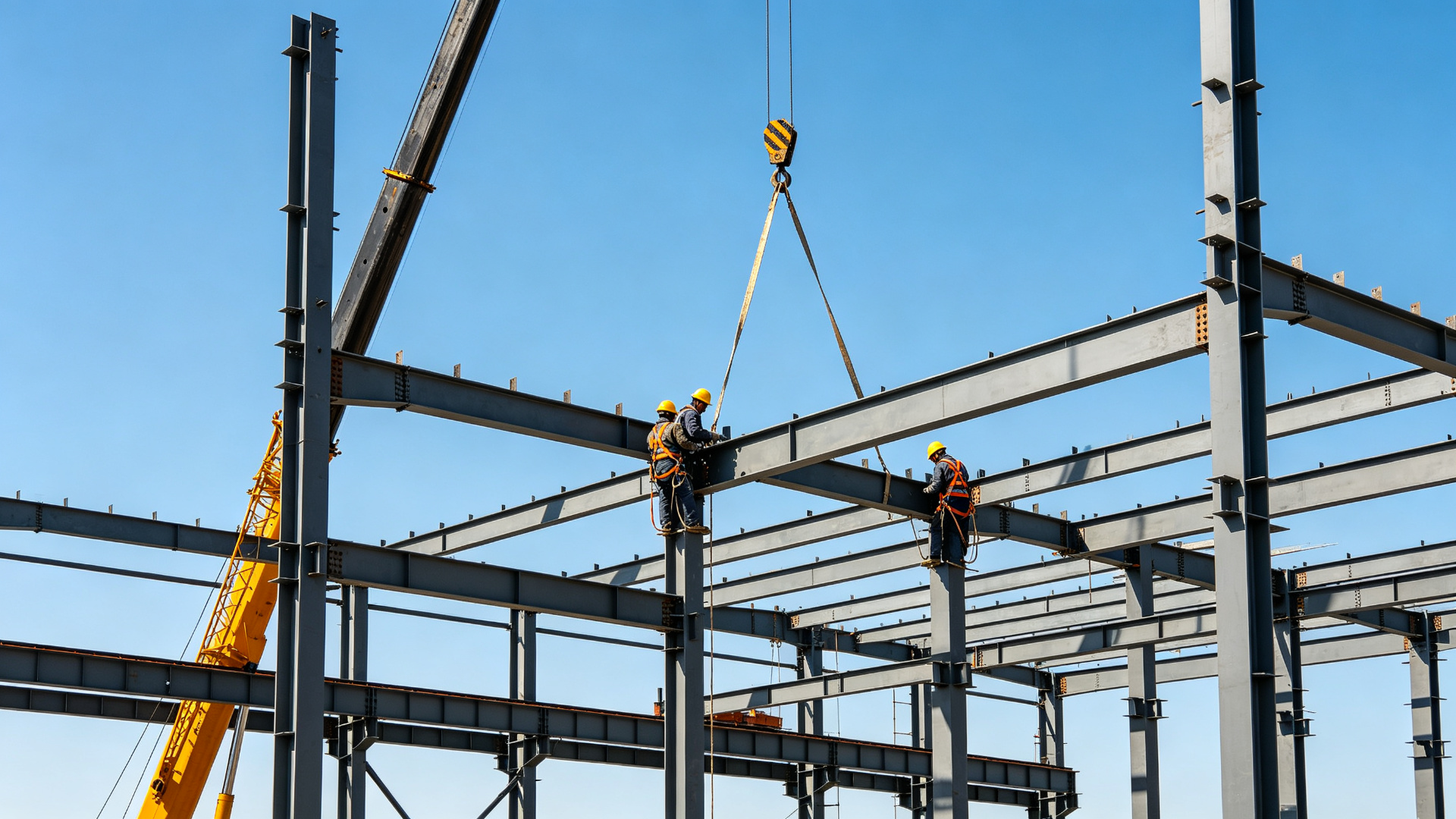
Proper installation is critical to the safety, durability, and performance of any steel structure. For overseas projects, coordination between the steel supplier, local contractors, and project owners becomes even more important.
1. Before Installation Begins
Site Preparation
- Ensure the site is level, compacted, and accessible for delivery trucks and cranes
- Clear the installation area of obstacles, debris, and underground utilities
- Prepare temporary roads for heavy equipment movement
- Plan storage areas for steel components, bolts, welding materials, and tools
Foundation Inspection
Before any steel is erected, thoroughly inspect the concrete foundations:
- Verify column base plate positions match the structural drawings
- Check anchor bolt positions, projections, and thread condition
- Confirm foundation concrete has reached the required strength
- Measure foundation levels and record any deviations
Delivery and Storage Planning
- Plan delivery sequencing so components arrive in installation order
- Store components on level, stable blocking to prevent deformation
- Keep similar members grouped and clearly identified
- Protect bolt holes, connection surfaces, and finished coatings from damage
2. Lifting and Crane Planning
Crane Selection
Select the appropriate crane based on:
- Maximum component weight and dimensions
- Lifting radius and height required
- Site conditions and ground bearing capacity
- Weather conditions and wind limits
- Available access and working space
Lifting Points
- Use only designated lifting points or lug angles specified in the fabrication drawings
- Never lift from random points on the member — this can cause deformation or damage
- For long or flexible members, use spreader beams or multiple lifting points
- Verify sling angles and ensure they are within safe working limits
Weather Considerations
- Stop lifting operations when wind speed exceeds the safe limit
- Avoid lifting in rain, snow, or fog when visibility is poor
- Secure partially erected structures before leaving the site overnight
- Check weather forecasts and plan critical lifts during favorable conditions
3. Installation Sequence
General Principles
Follow a logical installation sequence that ensures structural stability at every stage:
- Erect columns and secure with temporary bracing
- Install primary beams to form stable bays
- Add secondary members (purlins, girts, bracing)
- Install roof and wall cladding after structural alignment is confirmed
- Complete connections and final torqueing
Column Installation
- Lift columns vertically using lifting lugs or designated lifting points
- Align column base plates with anchor bolts
- Install nuts and washers, but do not fully tighten initially
- Use temporary bracing or guy wires to hold columns plumb
- Check column verticality with a theodolite or total station
- Adjust as needed before tightening base plate nuts
Beam Installation
- Lift beams to the correct elevation and position
- Align bolt holes with column connection plates
- Install drift pins to align holes, then insert bolts
- Install enough bolts to hold the member safely before releasing the crane
- Do not force members into position — this can cause damage or residual stress
4. Bolted Connections
Bolt Types
- Ordinary bolts (Grade 4.6/4.8): For secondary connections and non-critical joints
- High-strength bolts (Grade 8.8/10.9): For primary structural connections requiring pre-tension
- Anchor bolts: For column base plate connections to foundations
Installation Procedure
- Clean bolt holes and remove burrs, dirt, and rust
- Insert bolts from the consistent direction
- Install washers under both bolt head and nut
- Hand-tighten nuts initially
- Use a calibrated torque wrench for final tightening
- Mark tightened bolts with paint to indicate completion
Torque Control
- Follow the torque values specified in the project specifications
- Calibrate torque wrenches regularly
- Record torque values and inspection results
5. Welding on Site
When Field Welding is Needed
Most steel structures are designed for bolted connections to minimize field welding. However, field welding may be required for:
- Column splices
- Beam-to-column moment connections
- Special connections that cannot be bolted
- Repair of damaged or misaligned connections
Welding Preparation
- Clean weld surfaces of rust, paint, oil, and moisture
- Ensure proper fit-up and gap dimensions per the WPS
- Use appropriate backing bars or run-off tabs if required
- Protect the welding area from wind, rain, and excessive humidity
- Preheat materials if required
Welding Quality Control
- Only qualified welders should perform structural welding
- Follow the approved WPS for current, voltage, travel speed, and electrode type
- Use proper welding sequence to minimize distortion
- Perform visual inspection after welding
- For critical joints, arrange NDT as specified
6. Alignment and Tolerance Control
Critical Checks
During and after installation, verify:
- Column verticality (plumb)
- Column spacing and bay dimensions
- Beam elevation and level
- Roof slope and camber
- Overall building dimensions (diagonal checks)
- Connection alignment and fit-up
Adjustment Methods
- Use shims under base plates for elevation adjustment
- Adjust guy wires or temporary bracing for plumb correction
- Use jacks or come-alongs for alignment of heavy members
- Never use heat to correct misalignment unless specifically approved by the engineer
7. Safety Management
Personal Protective Equipment (PPE)
All installation workers must use:
- Safety helmets (hard hats)
- Safety harnesses with lanyards for work at height
- Steel-toe safety boots
- Gloves appropriate for the task
- Eye protection for grinding, cutting, and welding
- Hearing protection in noisy areas
Fall Protection
- Install guardrails or safety nets where possible
- Use full-body harnesses with shock-absorbing lanyards
- Anchor points must be certified and capable of holding the required load
- Never work on unbraced or unstable structures
- Use proper access ladders or lifts
Crane and Lifting Safety
- Only certified crane operators should operate lifting equipment
- Perform daily pre-use inspections of cranes and slings
- Keep workers clear of lifting zones
- Use tag lines to control suspended loads
- Stop operations if any unsafe condition is observed
8. Coordination with Local Contractors
Clear Communication
- Provide installation drawings, erection sequences, and connection details in advance
- Hold pre-installation meetings to review the plan, schedule, and safety requirements
- Assign a single point of contact for technical questions
- Document all decisions and changes in writing
Technical Support from the Supplier
A reputable steel supplier should provide:
- Detailed erection drawings and member identification lists
- Connection details and bolt torque specifications
- Welding procedure specifications (WPS) if field welding is required
- Technical guidance during installation (remote or on-site)
- Responses to technical questions within a reasonable timeframe
9. Inspection and Acceptance
Inspection Stages
- Foundation inspection — before steel erection begins
- In-process inspection — during installation, checking alignment, bolting, and welding
- Final structural inspection — after all structural steel is in place
- Connection inspection — verify all bolts are torqued, welds are complete
- Handover inspection — before cladding or other trades proceed
Documentation
Maintain complete records:
- Foundation inspection reports
- Column alignment and plumb readings
- Bolt torque inspection records
- Welding inspection and NDT reports
- Material certificates and traceability records
- As-built drawings and any field changes
- Photographic records of key stages
10. Post-Installation Considerations
Coating Touch-Up
- Inspect all shop-applied coatings for damage during transport and installation
- Touch up damaged areas according to the coating specification
- Pay special attention to connection areas, bolt heads, and field welds
- Ensure proper surface preparation before touch-up painting
Final Cleanup
- Remove all temporary bracing, guy wires, and erection aids
- Clean the site of welding slag, bolt off-cuts, packaging, and other debris
- Ensure no temporary materials are left inside the structure
- Restore any site areas disturbed during installation
Handover
- Provide as-built drawings and documentation to the project owner
- Confirm all inspections and tests are complete and accepted
- Obtain formal sign-off for the structural steel package
- Coordinate handover to the next trade (cladding, MEP, etc.)
Summary
Successful overseas steel structure installation requires careful planning, proper sequencing, rigorous quality control, and strong safety management. Key success factors include:
- Thorough preparation — site readiness, foundation inspection, and delivery planning
- Proper lifting — correct crane selection, lifting points, and weather awareness
- Logical sequence — columns first, then primary beams, then secondary members
- Connection quality — correct bolts, proper torque, qualified welding
- Alignment control — regular plumb, level, and dimension checks
- Safety first — PPE, fall protection, and lifting safety at all times
- Clear coordination — communication between supplier, contractor, and owner
- Complete documentation — inspection records, test reports, and as-built drawings
By following these guidelines and working with an experienced steel supplier that provides strong technical support, overseas projects can achieve safe, efficient, and high-quality steel structure installation.
Planning a steel structure project? Send your drawings or project requirements for review. ZhongSai can support fabrication supply, export coordination, and overseas installation technical guidance according to project scope.