
Container vs Breakbulk Shipping for Steel Structures: How to Choose
Both containers and breakbulk ships can carry steel structures, and the choice depends on member sizes, total tonnage, port facilities, packing and delivery requirements. Conventional columns, beams and purlins usually fit 40HQ containers when dismantled, while very long, tall or heavy members — long-span beams, assembled trusses, heavy equipment supports — often move as breakbulk cargo. There is no globally better option; the decision depends on the drawings, the member dimensions, the port's crane capacity and the schedule. ZhongSai has built steel structures for 20 years and focused on exports for 15, and coordinates packing, container loading and export for the buildings we fabricate.
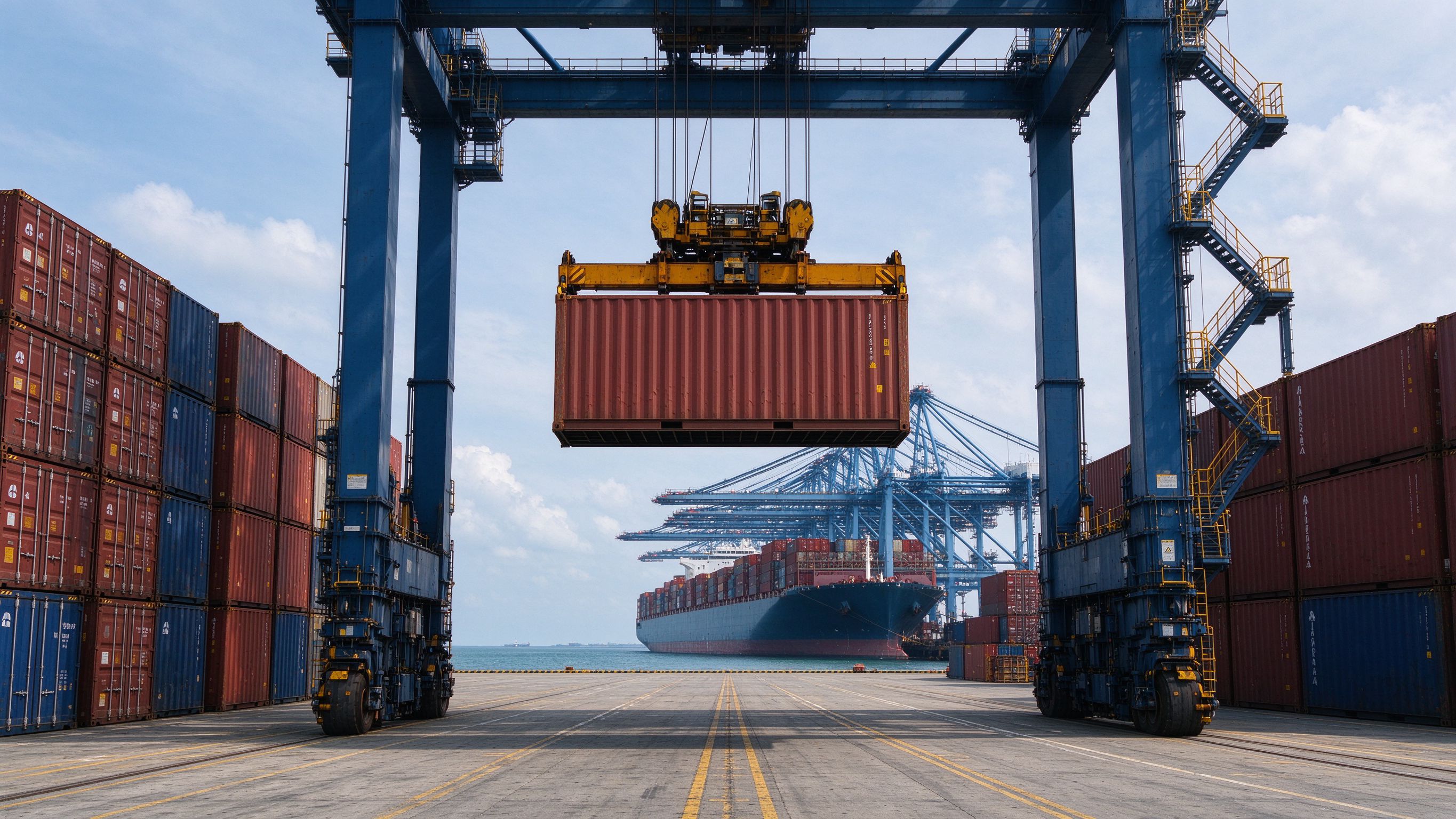
Both containers and breakbulk ships can carry steel structures, and the choice depends on member sizes, total tonnage, port facilities, packing and delivery requirements. Conventional columns, beams and purlins usually fit 40HQ containers when dismantled, while very long, tall or heavy members — long-span beams, assembled trusses, heavy equipment supports — often move as breakbulk cargo. There is no globally better option; the decision depends on the drawings, the member dimensions, the port’s crane capacity and the schedule. ZhongSai has built steel structures for 20 years and focused on exports for 15, and coordinates packing, container loading and export for the buildings we fabricate.
This guide explains how buyers decide between the two transport modes before the quotation stage.
What the two modes mean
Container shipping moves cargo in standard steel boxes — 20GP and 40HQ are the most common for steel members. Members are dismantled, marked, packed and loaded into the box at the port, then carried on scheduled liner services with fixed transit windows.
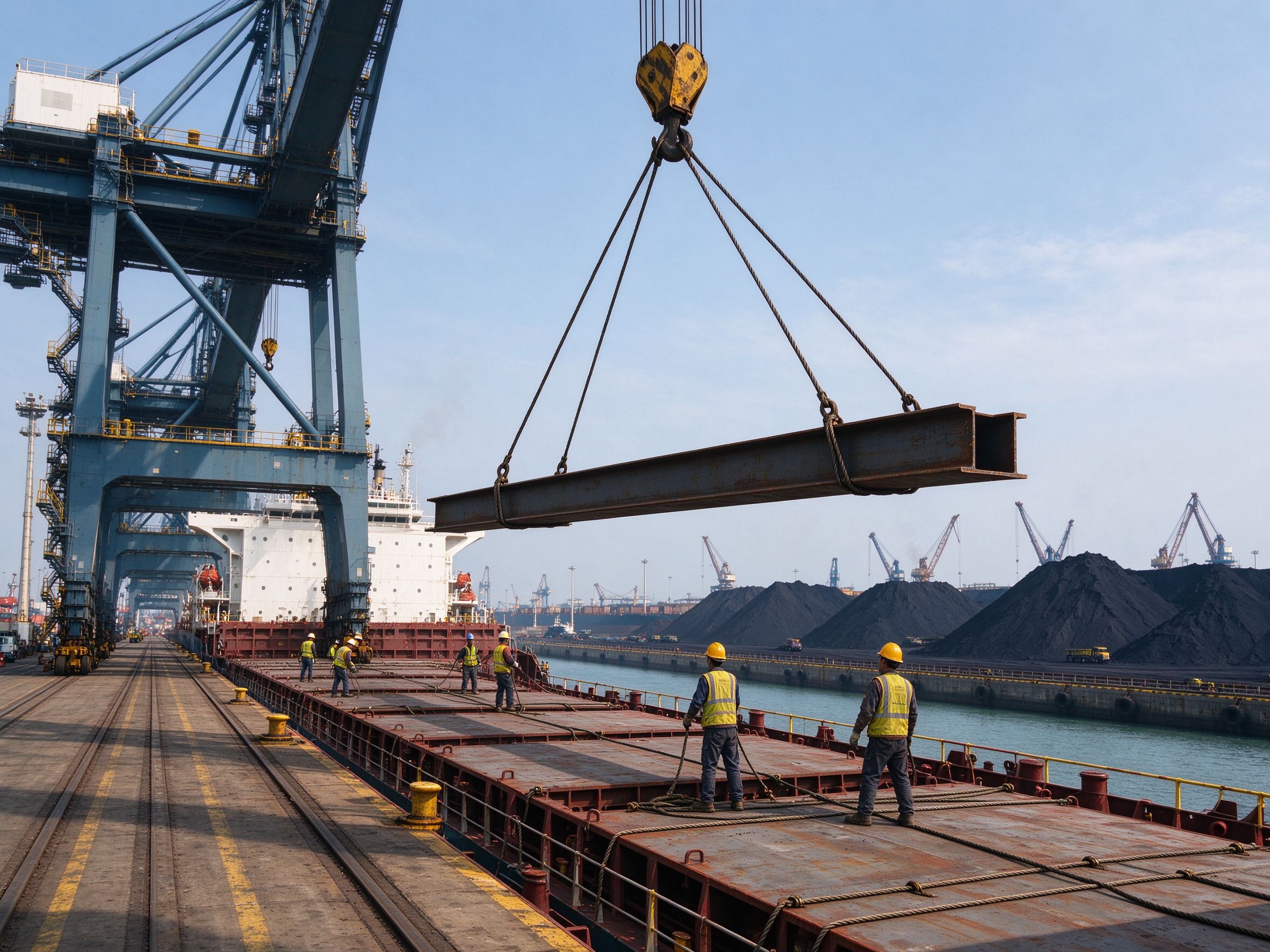
Breakbulk (general cargo / conventional) shipping moves oversized cargo on a vessel’s own deck or hold. Very long beams, assembled trusses, large tanks or heavy equipment supports travel as loose cargo, loaded by port cranes or ship’s gear. Schedules are less frequent and less predictable than liner services.
Decision table: container vs breakbulk
| Factor | Container (20GP / 40HQ) | Breakbulk |
|---|---|---|
| Best for | Dismantled columns, beams, purlins, girts, cladding, small accessories | Long-span beams, tall trusses, large tanks, heavy equipment supports |
| Member size limit | 40HQ internal height ~2.6–2.7 m, door height ~2.5–2.6 m; length up to ~12 m (per container) | Limited by the vessel’s hold/hatch and port crane reach, not by the box |
| Weight per unit | Limited by container payload (e.g. ~26–28 t for 40HQ, varies by line) | Can accept much heavier single pieces |
| Transit frequency | Scheduled weekly sailings on main routes | Less frequent, depends on the route |
| Cost shape | Clear per-box cost; empty-return and demurrage risks | Per-ton or per-shipment basis; port handling and tally fees |
| Port requirements | Standard container terminal | Heavy-lift crane or ship’s gear; deep berth for larger vessels |
| Packing | Members marked and braced inside the box; timber/steel bracing | Members lashed and dunnaged on deck or in hold |
| Best for project size | Small to medium tonnage projects, multiple boxes | Large one-off shipments with oversized pieces |
What decides the choice
- Member dimensions: anything that cannot pass the container door or fit the internal height — assembled trusses, long girders, tall columns in one piece — pushes toward breakbulk
- Total tonnage and number of pieces: a full project can also be split into multiple 40HQ boxes across several sailings
- Port facilities at destination: some ports have no heavy-lift crane for breakbulk; containers are handled almost everywhere
- Delivery schedule: liner containers have firmer ETAs; breakbulk schedules depend on berthing and port congestion
- Cost comparison: compare per-ton freight plus port charges, not just the sea freight line
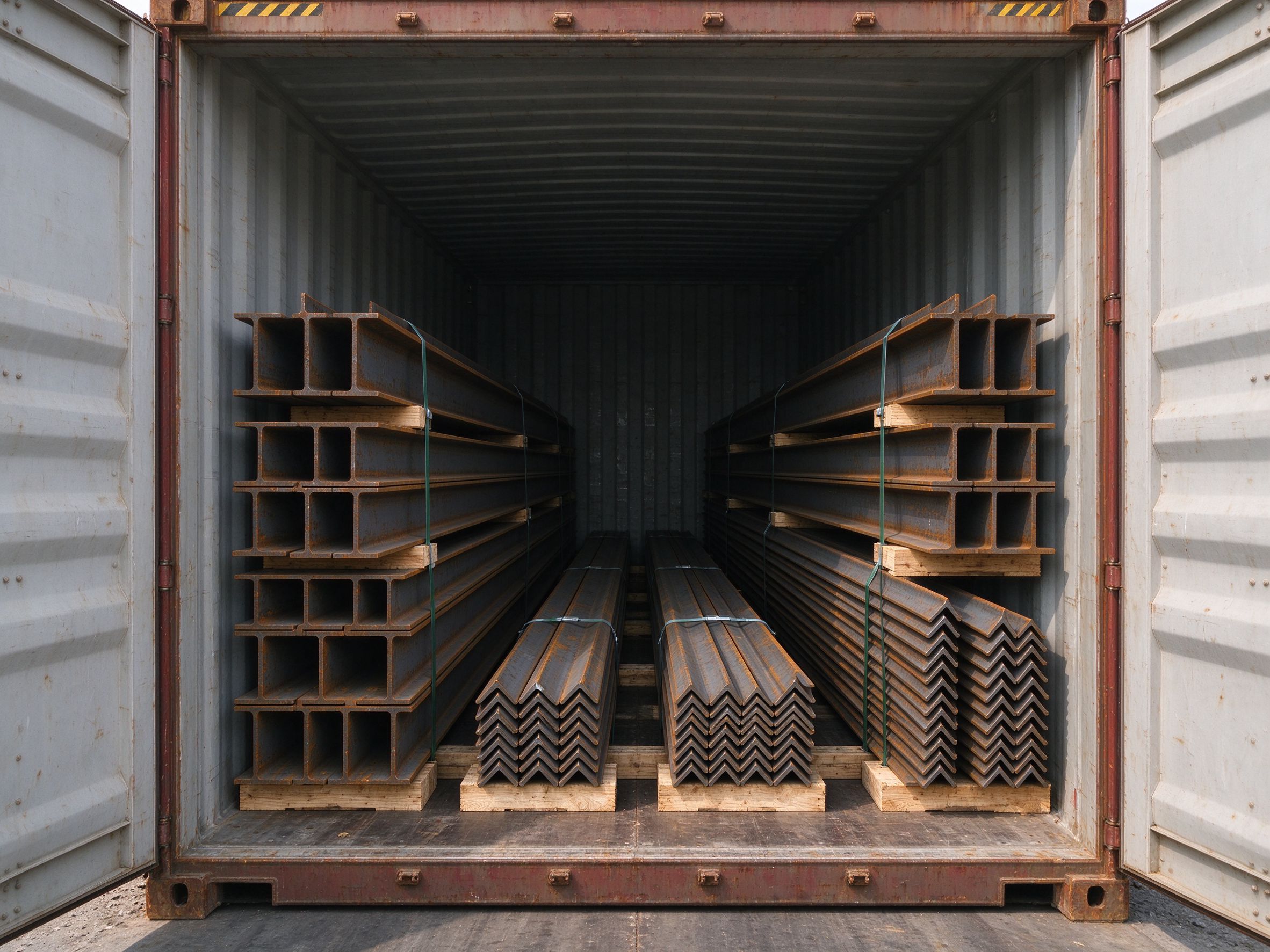
Container loading points
- Dismantle and mark every member; the marking system should match the erection drawings
- Check the 40HQ internal height against the tallest member, and the payload against the total steel tonnage
- Braced packing prevents movement during sea transport; lashing inside the box is part of safe stowage
- Group boxes by erection area so the site receives what it needs in order
- Weight distribution across the container floor avoids concentrated point loads
Breakbulk points
- Confirm the destination port’s crane capacity and berth depth for the heaviest or longest piece
- Breakbulk freight is often quoted per ton with separate port handling, tally and lashing costs
- Schedules are less fixed: build buffer into the site plan
- Insurance and survey terms differ from container cargo; confirm the Incoterm and the risk transfer point
Responsibility boundary
| Stage | ZhongSai (supplier) | Buyer / local party |
|---|---|---|
| Packing & marking | Per agreed spec and export packing standards | Confirm the destination handling capability |
| Container loading / stowage | Coordinate 40HQ loading and lashing | Provide port, berth and crane information |
| Export coordination | Documents, customs and vessel nomination | Arrange import clearance and inland transport |
| Risk & insurance | Per the agreed Incoterm | Insure the cargo per the risk transfer point |
Checklist before you choose the transport mode
- Member lengths compared with container internal length and door height
- Tallest and heaviest single piece confirmed
- Destination port crane capacity and berth checked
- Total tonnage and number of boxes estimated
- Site erection sequence matches the packing/loading grouping
- Incoterm and risk transfer agreed with the freight forwarder
- Insurance scope confirmed for the chosen mode
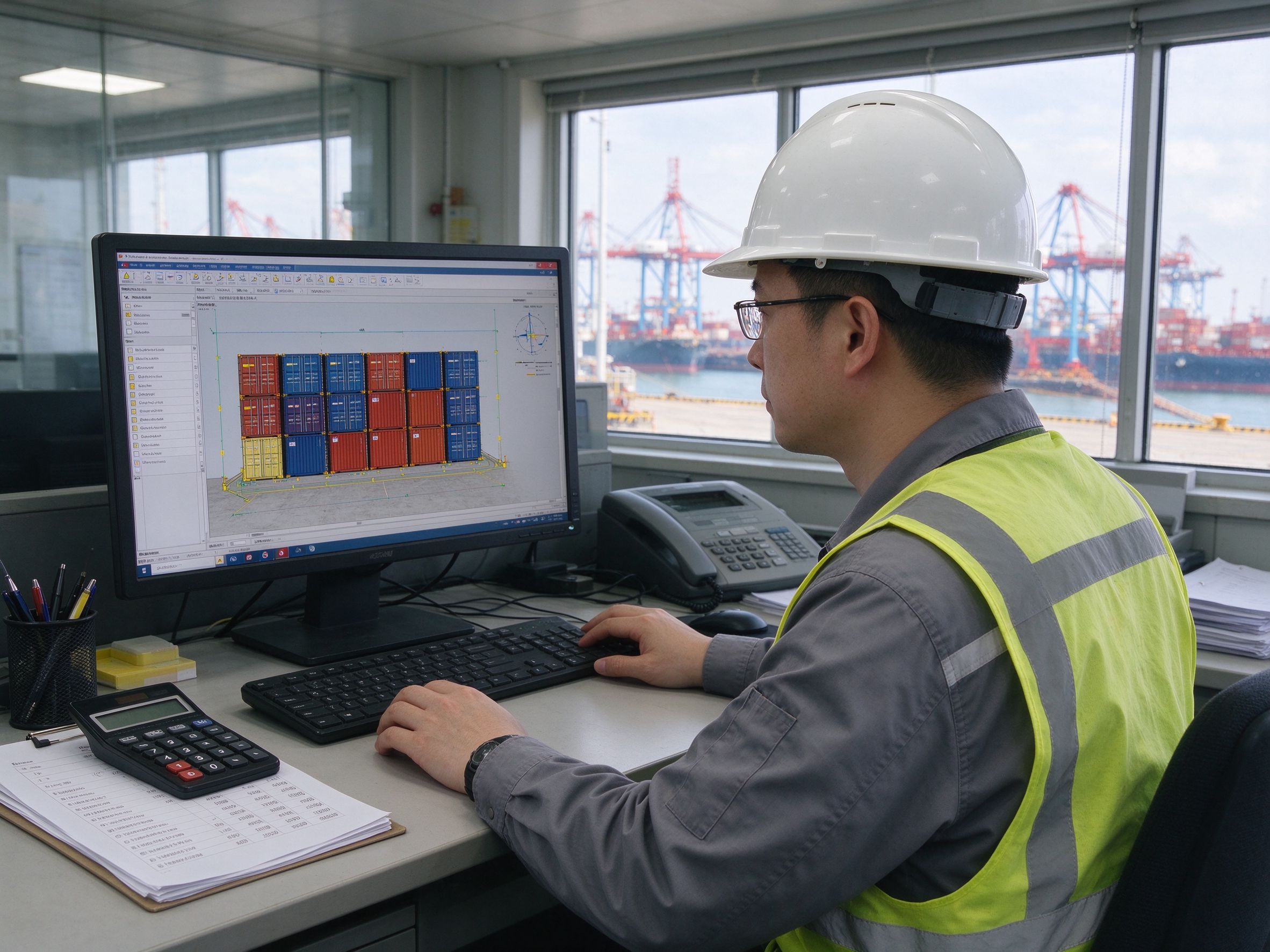
FAQ
Can a steel building be shipped in containers?
Yes. Dismantled columns, beams, purlins, cladding and accessories are commonly shipped in 40HQ containers, grouped by erection area.
When is breakbulk better than container?
When members cannot fit the container door or internal height — long-span beams, assembled trusses, tall one-piece columns — or when a single piece exceeds the container payload.
How do I know which mode my project needs?
Compare the longest and heaviest members against the container limits, then check the destination port’s crane capacity. The drawings decide the mode, not a global rule.
Does container shipping cost more than breakbulk?
Not necessarily. Compare per-ton sea freight plus port and handling charges for both options on the actual route; container liner service also gives a firmer schedule.
Can a project be split between containers and breakbulk?
Yes. Smaller and dismantled members can go by container while oversized pieces go by breakbulk, if the port can handle both and the arrival timing is coordinated.
Who packs and loads the container?
ZhongSai coordinates marking, packing and container loading for the buildings we fabricate, per the agreed export packing standard.
What if my destination port has no heavy-lift crane?
Then breakbulk becomes difficult for large pieces; the project may need to be split into containerable sizes or delivered through a nearby port with the right equipment.
Do I need insurance beyond the sea freight?
The Incoterm defines who bears risk and insurance; confirm the coverage for the chosen mode with the freight forwarder before shipment.
Sending a steel structure overseas?
Send the drawings and the longest/heaviest member sizes; ZhongSai will confirm the packing, the container or breakbulk option and the export coordination before quoting.