
Steel Structure Welding Quality Control: Complete Guide for Buyers
Welding quality directly affects the safety and durability of steel structures. This guide helps buyers understand welding processes, inspection methods, and quality standards.
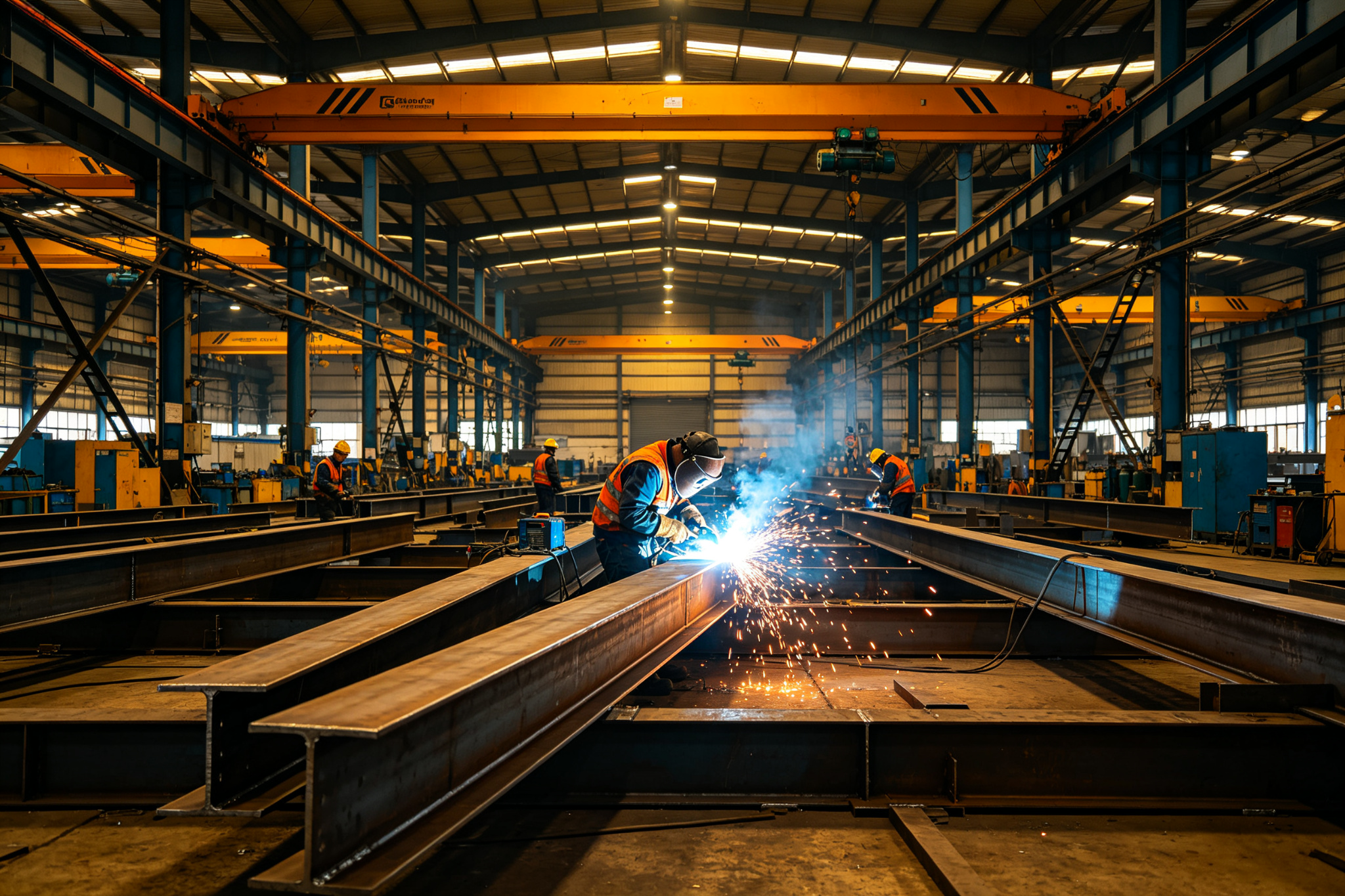
Direct Answer: What Buyers Need to Know About Welding Quality
Welding is one of the most critical processes in steel structure fabrication. Poor welding quality can lead to structural failure, safety hazards, and costly rework. For international buyers sourcing steel structures from China, understanding welding quality control is essential to ensure you receive safe, durable, and code-compliant products.
Key points every buyer should understand:
- Welding process selection depends on material type, thickness, joint design, and project requirements
- Quality control starts before welding begins with material verification, procedure qualification, and welder certification
- Inspection methods include visual inspection, magnetic particle testing, ultrasonic testing, and radiographic testing
- Documentation is crucial: welding procedure specifications (WPS), procedure qualification records (PQR), and welder qualification records
- Final structural design should be based on project location, applicable codes, loads and project-specific engineering requirements.
Part 1: Understanding Steel Structure Welding
What is Structural Welding?
Structural welding is the process of joining steel components using heat and pressure to create a permanent bond. In steel structure fabrication, welding is used to connect beams, columns, trusses, and other structural elements.
The quality of a weld depends on several factors:
- Proper joint preparation and fit-up
- Correct welding parameters (current, voltage, travel speed)
- Skilled and certified welders
- Appropriate welding consumables (electrodes, wire, flux)
- Good environmental conditions (temperature, humidity, wind)
Common Welding Processes in Steel Fabrication
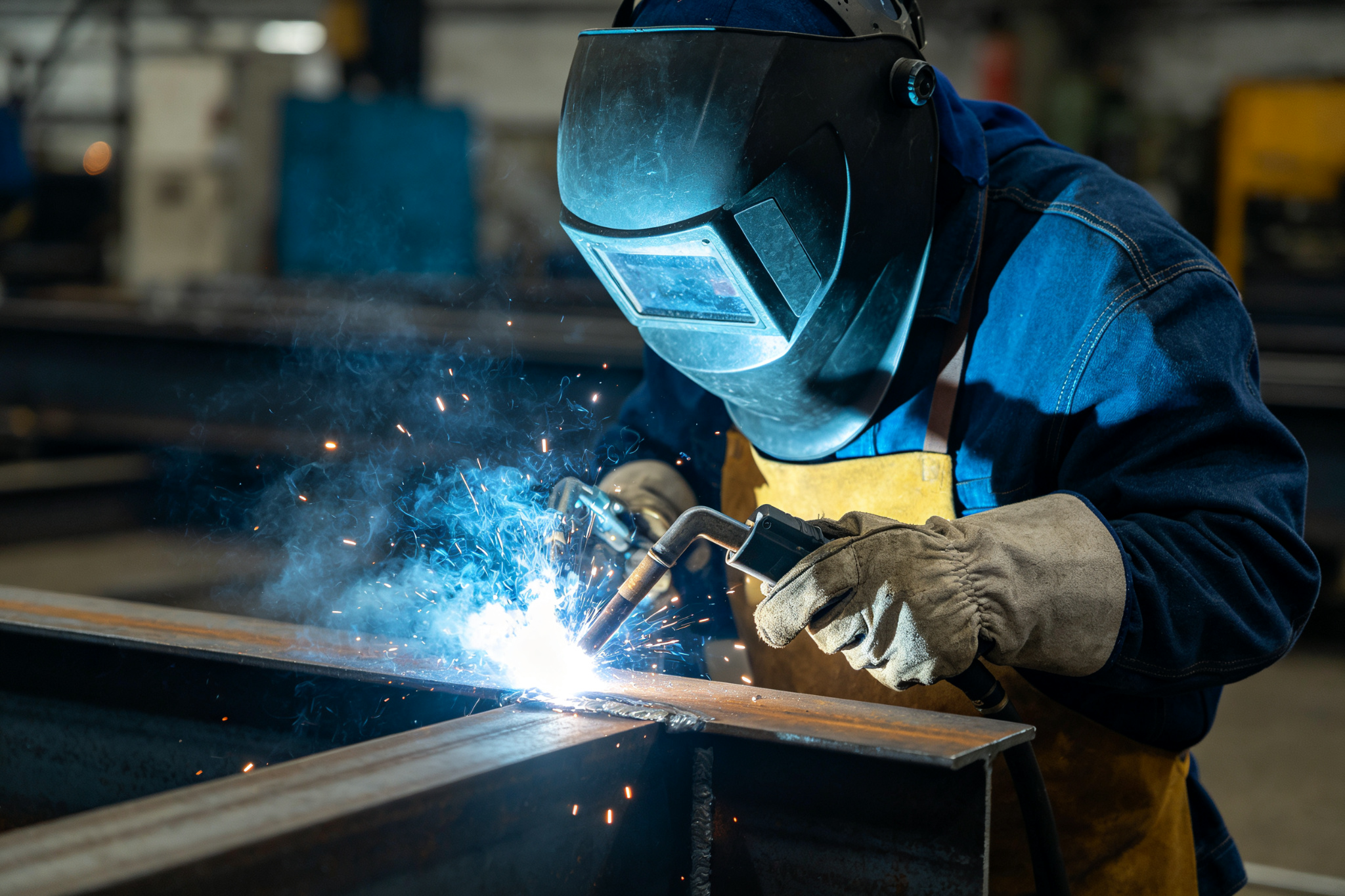
1. Shielded Metal Arc Welding (SMAW)
Also known as stick welding, SMAW is one of the oldest and most versatile welding processes. It uses a consumable electrode coated in flux to lay the weld.
Advantages:
- Simple equipment, portable
- Works well in outdoor and windy conditions
- Suitable for most carbon steel applications
- Low equipment cost
Limitations:
- Slower than other processes
- More slag to remove
- Higher skill requirement for quality welds
- Not ideal for very thin materials
2. Gas Metal Arc Welding (GMAW/MIG)
GMAW uses a continuous solid wire electrode fed through a welding gun, along with a shielding gas to protect the weld pool from contamination.
Advantages:
- High deposition rate, fast welding
- Minimal slag, easy cleanup
- Good for both thin and thick materials
- Easy to automate
Limitations:
- Equipment more complex and expensive
- Shielding gas can be disrupted by wind (not ideal for outdoor use)
- Requires more maintenance
- Less portable than SMAW
3. Flux-Cored Arc Welding (FCAW)
FCAW is similar to GMAW but uses a tubular wire filled with flux instead of a solid wire. Some variants require external shielding gas, while others are self-shielding.
Advantages:
- High deposition rate
- Good penetration
- Self-shielding variants work well outdoors
- Suitable for thick materials and heavy fabrication
Limitations:
- More slag to remove
- Higher fume generation
- Wire more expensive than solid wire
- Equipment cost similar to GMAW
4. Submerged Arc Welding (SAW)
SAW is a high-productivity welding process where the arc is struck beneath a blanket of granular flux. The flux protects the weld pool and prevents spatter and fumes.
Advantages:
- Very high deposition rate
- Deep penetration
- Excellent weld quality
- No visible arc, low fume
- Easy to automate
Limitations:
- Only suitable for flat and horizontal positions
- Equipment bulky and expensive
- Flux handling and recovery required
- Not portable
Which Process is Right for Your Project?
The choice of welding process depends on your project requirements:
| Factor | SMAW | GMAW/MIG | FCAW | SAW |
|---|---|---|---|---|
| Outdoor use | Excellent | Poor | Good | Poor |
| Thick materials | Good | Good | Excellent | Excellent |
| Thin materials | Fair | Excellent | Fair | Not suitable |
| High productivity | Fair | Good | Good | Excellent |
| Portability | Excellent | Fair | Fair | Poor |
| Automation | Difficult | Easy | Easy | Easy |
For most steel structure fabrication projects, a combination of processes is used: GMAW/FCAW for shop fabrication, SMAW for field erection and repair, and SAW for heavy, high-volume components in the flat position.
Part 2: Welding Quality Control Process
Quality Control Starts Before Welding
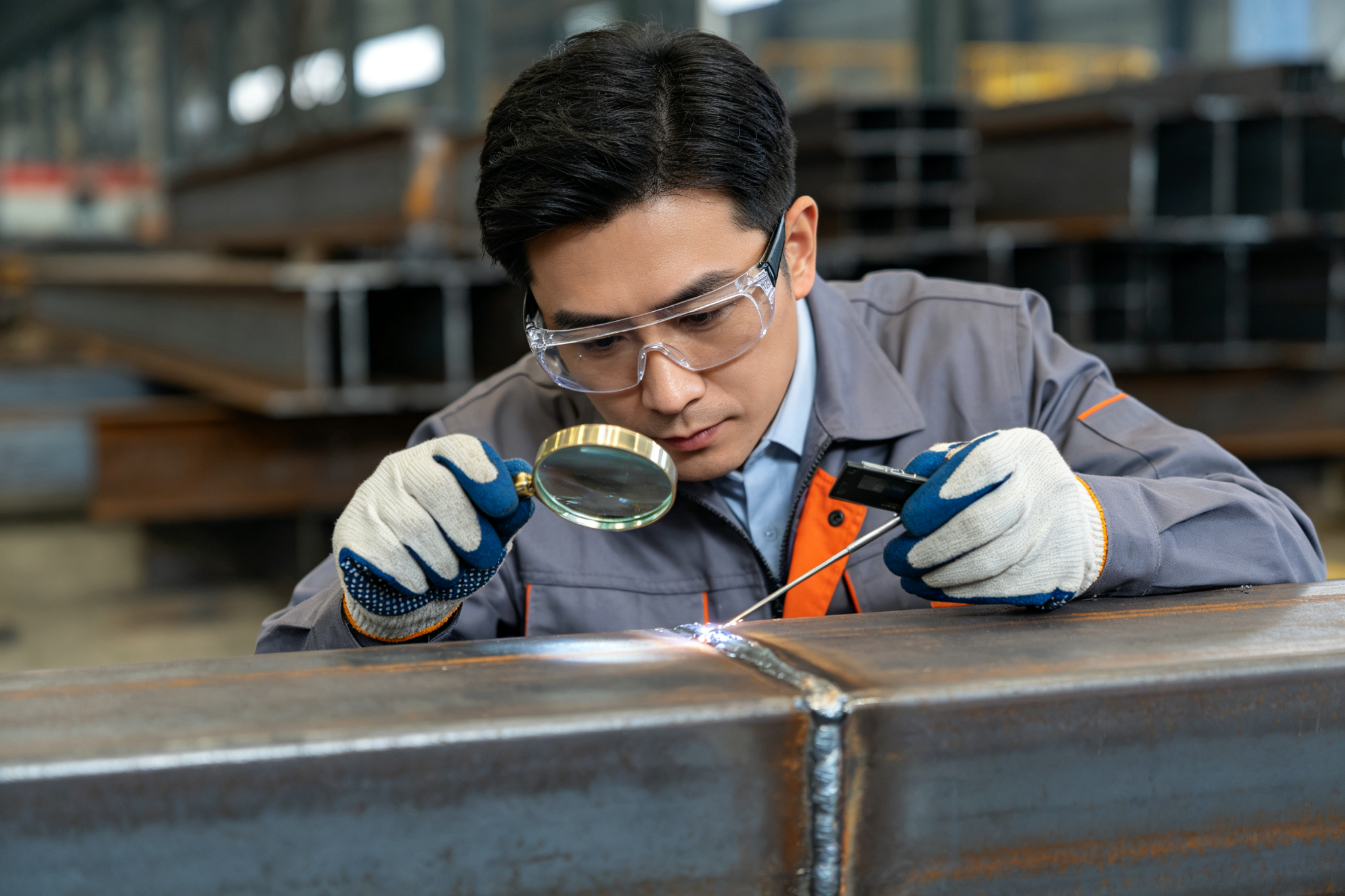
Effective welding quality control is not just about inspecting finished welds. It starts long before the first arc is struck.
1. Material Verification
Before any welding begins, all materials must be verified:
- Steel plates and sections must have material test reports (MTR)
- Chemical composition and mechanical properties must match project specifications
- Welding consumables (electrodes, wire, flux) must be approved for the material and application
- Consumables must be stored properly to prevent moisture contamination
2. Welding Procedure Specification (WPS)
A WPS is a written document that provides direction for making production welds. It includes:
- Welding process (SMAW, GMAW, FCAW, SAW)
- Base material type and thickness range
- Joint design and preparation
- Welding positions
- Preheat and interpass temperature requirements
- Welding parameters (current, voltage, travel speed)
- Shielding gas type and flow rate
- Post-weld heat treatment requirements
3. Procedure Qualification Record (PQR)
A PQR is a document that records the test results of a weld made according to a WPS. It proves that the welding procedure can produce welds with the required mechanical properties.
The PQR includes:
- Tensile test results
- Bend test results
- Impact test results (if required)
- Macro examination results
- Hardness test results (if required)
4. Welder Qualification
Welders must be qualified according to applicable codes (such as AWS D1.1, EN ISO 9606, or ASME IX). Welder qualification includes:
- Written test on welding theory and code requirements
- Practical welding test in the required positions
- Visual and non-destructive testing of test welds
- Periodic requalification (usually every 6 months to 2 years)
In-Process Quality Control
Once welding begins, quality control continues throughout the process.
1. Joint Preparation and Fit-Up Inspection
Before welding, each joint must be inspected:
- Joint geometry (groove angle, root opening, root face) must match drawings
- Edge preparation must be clean and free of defects
- Fit-up must be within tolerances
- Misalignment must be within acceptable limits
- Surfaces must be clean, free of rust, paint, oil, and moisture
2. Preheat Verification
For certain materials and thicknesses, preheating is required to:
- Slow the cooling rate
- Prevent hydrogen-induced cracking
- Reduce residual stresses
- Improve weld quality
Preheat temperature must be verified before welding begins and maintained throughout the welding process. Temperature is typically measured with temperature-indicating crayons, infrared thermometers, or thermocouples.
3. Welding Parameter Monitoring
During welding, key parameters must be monitored:
- Welding current (amperage)
- Arc voltage
- Travel speed
- Electrode extension (stick-out)
- Shielding gas flow rate
- Interpass temperature
Deviations from the approved WPS can result in weld defects such as lack of fusion, porosity, or excessive spatter.
4. Interpass Cleaning
Between weld passes, the weld surface must be cleaned:
- Slag must be completely removed
- Spatter must be cleaned
- Surface must be inspected for defects before the next pass
- Any defects found must be removed and repaired before continuing
Post-Weld Inspection
After welding is complete, finished welds undergo inspection.
1. Visual Inspection (VT)
Visual inspection is the first and most basic form of weld inspection. It includes checking:
- Weld size and profile (convexity, concavity, reinforcement)
- Weld length and continuity
- Surface defects (cracks, porosity, undercut, overlap)
- Spatter and slag removal
- Dimensional accuracy
Visual inspection should be performed by qualified inspectors and documented with inspection reports and photographs.
2. Magnetic Particle Testing (MT)
Magnetic particle testing is used to detect surface and slightly subsurface defects in ferromagnetic materials. The process involves:
- Magnetizing the weld area
- Applying magnetic particles (dry powder or wet suspension)
- Inspecting for particle accumulations that indicate defects
MT is effective for detecting:
- Surface cracks
- Linear inclusions
- Lack of fusion at the surface
- Porosity near the surface
3. Liquid Penetrant Testing (PT)
Liquid penetrant testing is used to detect surface-breaking defects in both ferromagnetic and non-ferromagnetic materials. The process involves:
- Cleaning the surface
- Applying penetrant (dye or fluorescent)
- Allowing penetrant to seep into defects (dwell time)
- Removing excess penetrant
- Applying developer
- Inspecting for indications
PT is useful for:
- Surface cracks
- Porosity
- Lack of fusion
- Leak testing
4. Ultrasonic Testing (UT)
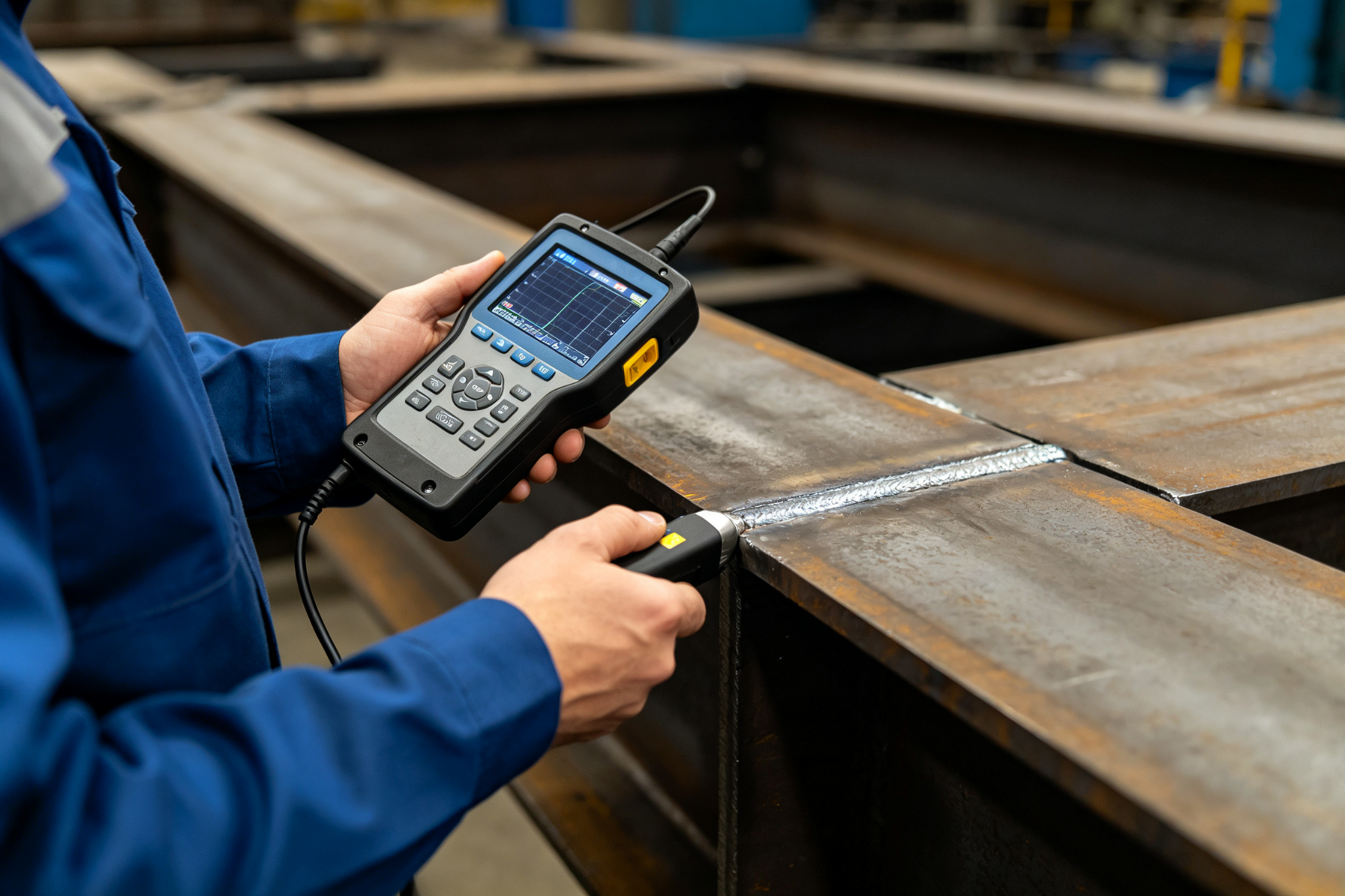
Ultrasonic testing uses high-frequency sound waves to detect internal defects in welds. The process involves:
- Applying couplant to the surface
- Transmitting ultrasonic waves into the material
- Receiving reflected waves from defects
- Analyzing the signals to determine defect location, size, and type
UT is effective for detecting:
- Internal cracks
- Lack of fusion
- Lack of penetration
- Inclusions
- Porosity
UT requires highly skilled technicians and is one of the most widely used non-destructive testing methods for structural welds.
5. Radiographic Testing (RT)
Radiographic testing uses X-rays or gamma rays to create an image of the internal structure of a weld. The process involves:
- Placing a film or detector on one side of the weld
- Exposing the weld to radiation from the other side
- Developing and interpreting the film
RT provides a permanent record and is effective for detecting:
- Internal porosity
- Inclusions
- Lack of fusion
- Lack of penetration
- Cracks
RT is often required for critical welds in bridges, buildings, and pressure vessels.
Part 3: Common Welding Defects and Causes
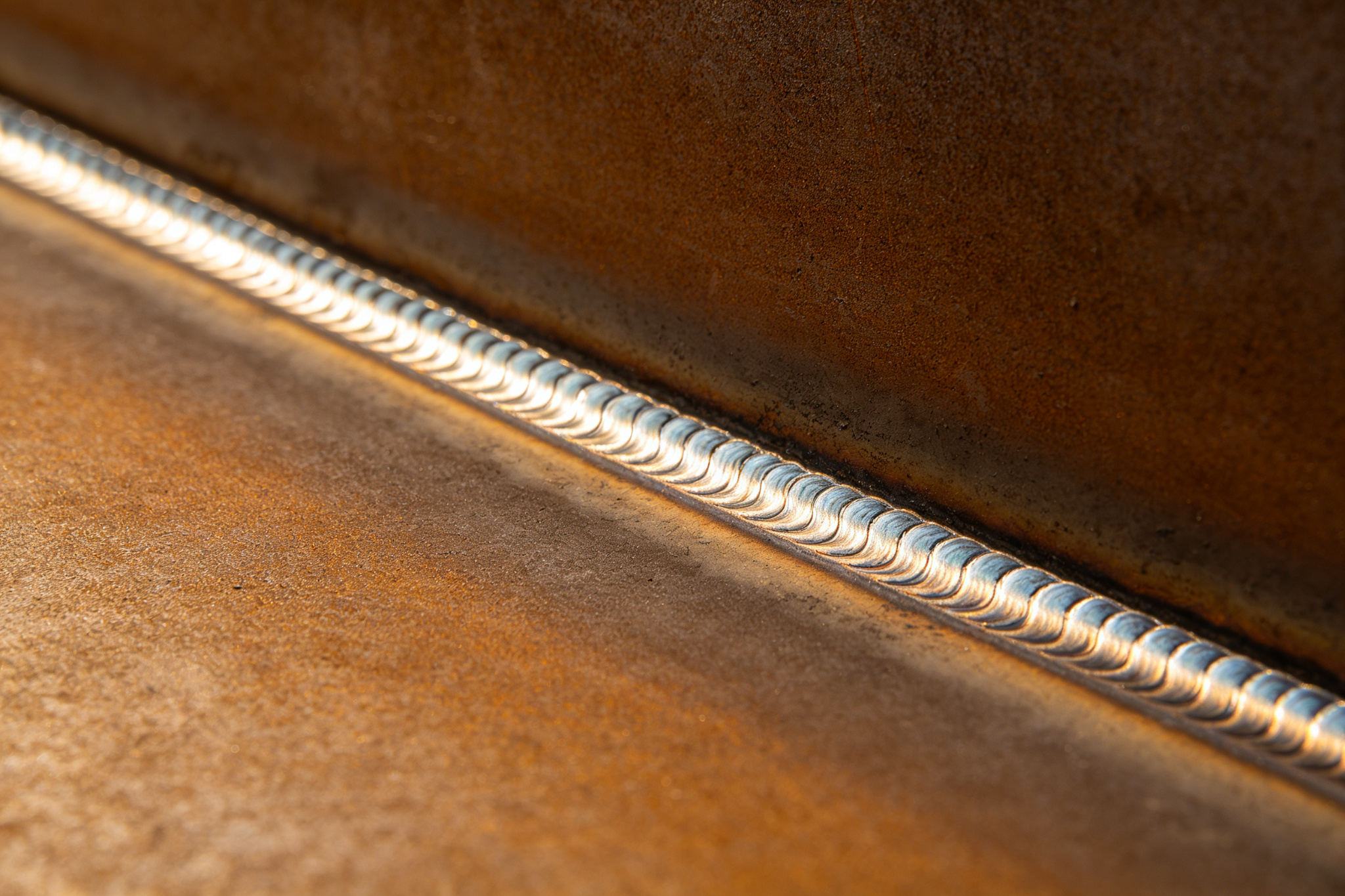
Surface Defects
1. Cracks
Cracks are the most serious welding defect and can lead to catastrophic failure.
Types:
- Hot cracks (occur during solidification)
- Cold cracks (occur after cooling, often delayed)
- Crater cracks (occur at the end of a weld)
Causes:
- High carbon or alloy content in base material
- High hydrogen levels in weld metal
- Rapid cooling
- High residual stresses
- Poor joint design
- Incorrect welding parameters
Prevention:
- Use low-hydrogen welding processes and consumables
- Preheat as required
- Control cooling rate
- Proper joint design
- Correct welding parameters
2. Porosity
Porosity is the presence of gas pockets or voids in the weld metal.
Causes:
- Contamination of base material or filler metal (oil, rust, paint, moisture)
- Inadequate shielding gas coverage
- Excessive moisture in flux or electrodes
- Too high welding current
- Too long arc length
- Poor gas quality
Prevention:
- Clean all surfaces before welding
- Use proper shielding gas flow rates
- Store consumables properly
- Use correct welding parameters
- Check gas quality and equipment
3. Undercut
Undercut is a groove melted into the base metal adjacent to the weld toe that is not filled with weld metal.
Causes:
- Too high welding current
- Too long arc length
- Incorrect electrode angle
- Too fast travel speed
- Incorrect manipulation technique
Prevention:
- Use correct welding parameters
- Maintain proper arc length
- Use correct electrode angle
- Control travel speed
- Proper weaving technique
4. Overlap
Overlap occurs when weld metal flows over the surface of the base metal without fusing with it.
Causes:
- Too low welding current
- Too slow travel speed
- Incorrect electrode angle
- Poor manipulation technique
Prevention:
- Use correct welding parameters
- Control travel speed
- Use correct electrode angle
- Proper manipulation technique
Internal Defects
1. Lack of Fusion (LOF)
Lack of fusion occurs when weld metal does not fuse with the base metal or previous weld pass.
Causes:
- Insufficient heat input
- Incorrect joint design
- Poor joint preparation
- Incorrect electrode angle
- Too fast travel speed
- Contamination of surfaces
Prevention:
- Use adequate heat input
- Proper joint design and preparation
- Correct electrode angle
- Control travel speed
- Clean all surfaces
2. Lack of Penetration (LOP)
Lack of penetration occurs when the weld does not extend to the full depth of the joint.
Causes:
- Insufficient heat input
- Too narrow groove angle
- Too large root face
- Too small root opening
- Too fast travel speed
- Incorrect electrode size
Prevention:
- Use adequate heat input
- Proper joint design
- Correct root opening and root face
- Control travel speed
- Use appropriate electrode size
3. Inclusions
Inclusions are foreign materials trapped in the weld metal or between weld passes.
Types:
- Slag inclusions
- Tungsten inclusions (in GTAW)
- Oxide inclusions
Causes:
- Inadequate interpass cleaning
- Incorrect joint design
- Too low welding current
- Poor welding technique
- Contamination of consumables
Prevention:
- Proper interpass cleaning
- Correct joint design
- Use adequate heat input
- Proper welding technique
- Use clean consumables
Part 4: Welding Quality Standards and Codes
International Welding Standards
Several international standards govern welding quality in steel structures:
1. AWS D1.1/D1.1M (American Welding Society)
AWS D1.1 is the most widely used structural welding code in North America. It covers:
- Welding of carbon and low-alloy steel structures
- Welding procedure qualification
- Welder qualification
- Inspection and testing requirements
- Acceptance criteria for weld defects
2. EN ISO 3834 (European Standard)
EN ISO 3834 specifies quality requirements for fusion welding of metallic materials. It has several levels:
- EN ISO 3834-2: Comprehensive quality requirements
- EN ISO 3834-3: Standard quality requirements
- EN ISO 3834-4: Elementary quality requirements
3. EN 1090 (European Standard for Steel Structures)
EN 1090 covers the execution of steel structures and includes welding quality requirements. It has four execution classes (EXC1 to EXC4), with EXC4 being the highest quality level.
4. GB 50661 (Chinese Standard)
GB 50661 is the Chinese national standard for welding of steel structures. It covers:
- Welding procedures and qualification
- Welder qualification
- Inspection and testing
- Acceptance criteria
What Standards Apply to Your Project?
The applicable welding standards depend on:
- Project location (country/region)
- Building type and occupancy
- Structural design code
- Client requirements
- Project specifications
For international projects, it is common to specify:
- AWS D1.1 for projects in North America
- EN 1090 / EN ISO 3834 for projects in Europe
- Project-specific standards for other regions
Always confirm the applicable standards with your project engineer and communicate them clearly to your supplier.
Part 5: What Buyers Should Ask Their Supplier
Questions About Welding Capability
- What welding processes do you use? (SMAW, GMAW, FCAW, SAW, GTAW)
- What is your maximum welding capacity? (material thickness, component size)
- Do you have automated or robotic welding?
- What positions can you weld in? (flat, horizontal, vertical, overhead)
- What materials can you weld? (carbon steel, low-alloy steel, stainless steel)
Questions About Quality Control
- Do you have a written welding quality control program?
- What standards do you follow? (AWS D1.1, EN 1090, GB 50661)
- Do you have certified welding inspectors? (CWI, CSWIP)
- What non-destructive testing methods do you use? (VT, MT, PT, UT, RT)
- Do you have in-house NDT capability or do you subcontract?
- What is your typical weld rejection rate?
Questions About Documentation
- Can you provide WPS and PQR for all welding procedures?
- Can you provide welder qualification records?
- What inspection documentation do you provide?
- Can you provide material test reports (MTR) for all materials?
- Do you provide welding maps or traceability documentation?
Questions About Project-Specific Requirements
- Can you weld according to our project specifications?
- Can you accommodate special inspection requirements?
- What is your process for handling weld defects and rework?
- Can you provide third-party inspection if required?
- How do you handle welding in difficult weather conditions?
Part 6: Buyer Checklist for Welding Quality
Before Production
- Confirm applicable welding standards and codes
- Review supplier’s WPS and PQR documentation
- Verify welder qualifications for required positions and processes
- Confirm material specifications and traceability
- Review joint designs and welding details on drawings
- Confirm inspection and testing requirements
- Establish acceptance criteria for weld defects
During Production
- Verify joint preparation and fit-up
- Check preheat temperatures (if required)
- Monitor welding parameters against approved WPS
- Verify interpass cleaning
- Conduct visual inspection of completed welds
- Schedule NDT at required intervals
- Document all inspections and test results
- Review and approve any weld repairs
Before Shipment
- Review all welding documentation (WPS, PQR, welder records)
- Review all inspection and NDT reports
- Verify weld repairs have been properly completed and re-inspected
- Confirm dimensional accuracy of welded components
- Verify surface preparation and coating requirements
- Review packing and marking for component identification
- Confirm all required documentation is included with shipment
Part 7: Related ZhongSai Capabilities
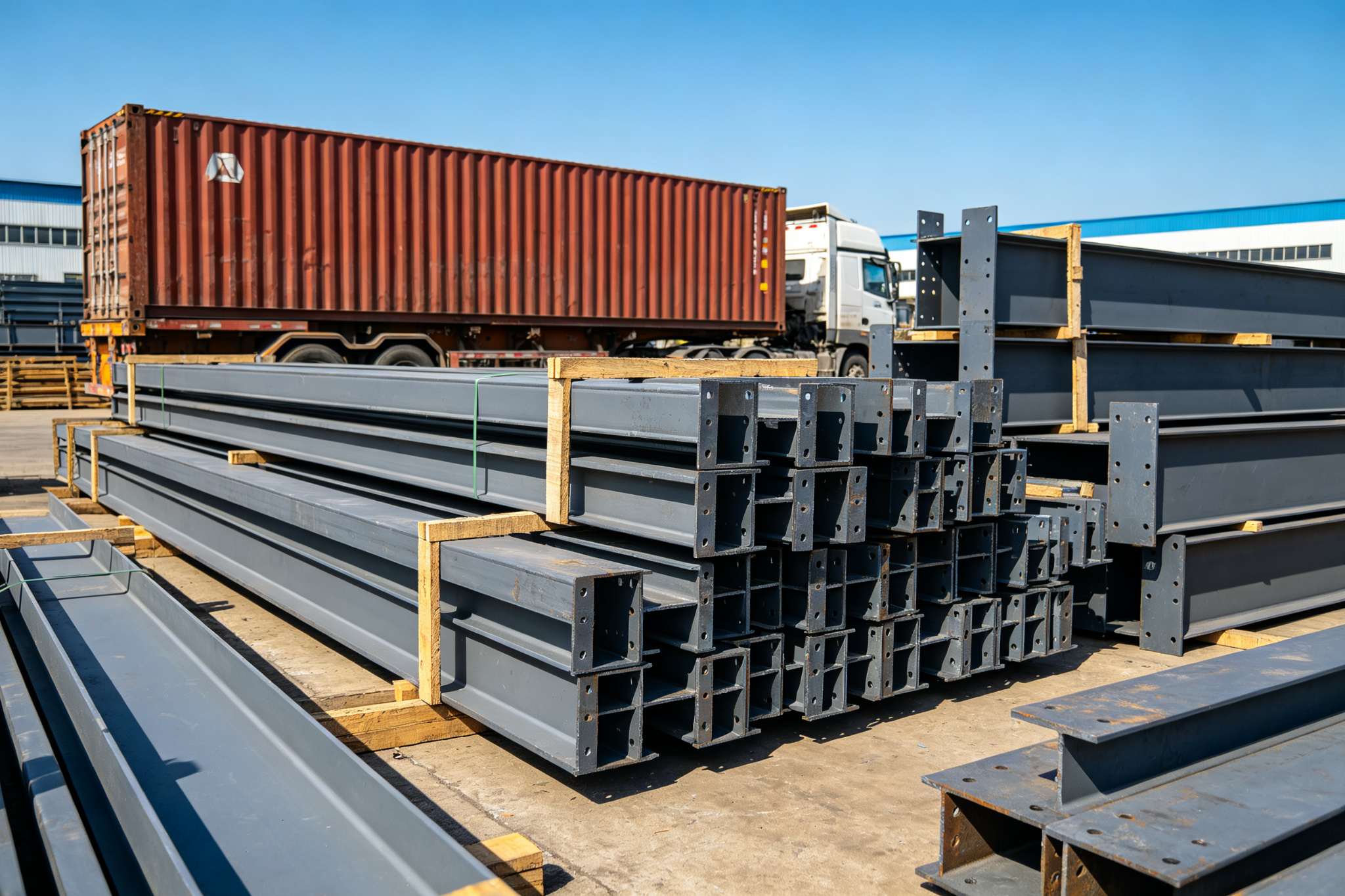
Manufacturing Capabilities
ZhongSai supports steel structure project supply, export coordination, project communication and overseas technical support according to project scope. Our manufacturing capabilities include:
- CNC Cutting: Precision cutting of steel plates and sections
- Assembly: Accurate fit-up of structural components
- Welding: Multiple welding processes (SMAW, GMAW, FCAW, SAW)
- Drilling: Precision hole making for bolted connections
- Surface Treatment: Sandblasting, priming, and finishing
- Inspection: Visual and dimensional inspection at each stage
Quality Control
Our quality control process includes:
- Incoming material inspection and verification
- In-process inspection at each production stage
- Final inspection before shipment
- Documentation of all inspections and test results
Export Coordination
We support:
- Packing and loading planning for container shipping
- Export documentation support
- Logistics coordination
- Overseas installation technical guidance
Frequently Asked Questions
Q: How do I know if my supplier’s welds are good quality?
A: Good welding quality is demonstrated through documentation and inspection. Ask your supplier for WPS/PQR records, welder qualifications, inspection reports, and NDT results. You can also request third-party inspection or visit the factory to observe welding operations.
Q: What is the most common welding defect in steel structures?
A: The most common defects vary by project, but porosity, lack of fusion, and undercut are frequently encountered. These defects are often caused by poor surface preparation, incorrect welding parameters, or inadequate welder skill. A good quality control program can prevent most common defects.
Q: Do I need to specify welding standards in my purchase order?
A: Yes, always specify the applicable welding standards in your purchase order and project specifications. This ensures the supplier understands your quality requirements and can provide the necessary documentation and inspection. Without clear specifications, the supplier may use their default standards, which may not meet your project requirements.
Q: Can weld defects be repaired?
A: Yes, most weld defects can be repaired through grinding out the defective area and re-welding. However, repairs must be done according to approved procedures and the repaired weld must be re-inspected. Excessive repairs can indicate systemic quality issues and should be investigated.
Q: How much does welding quality affect the cost of a steel structure?
A: Welding quality can significantly affect both initial and long-term costs. Poor welding quality can lead to rework costs during fabrication, delays in project schedule, and potential structural failures that require expensive repairs. Investing in good welding quality control upfront is almost always more cost-effective than dealing with quality issues later.
Q: What is the difference between welding procedure qualification and welder qualification?
A: Welding procedure qualification (PQR) proves that a specific welding procedure (WPS) can produce welds with the required mechanical properties. Welder qualification proves that an individual welder has the skill to make welds according to an approved procedure. Both are required: a good procedure executed by an unskilled welder will produce poor welds, just as a skilled welder using a bad procedure will produce poor welds.
Ready to Discuss Your Steel Structure Project?
If you have drawings, BOQ, or project requirements for a steel structure project, send them to us for review. We can assess the fabrication requirements, welding procedures, and quality control needs for your specific project.
Send Drawings for Fabrication Review
We will review your available information and discuss the technical and commercial requirements for your project. Missing project information can be clarified during follow-up communication.
Final structural design should be based on project location, applicable codes, loads and project-specific engineering requirements.